Agent Hunt – Hitman Shooter
HomaAction
4.510.58K Reviews
- Version
- 33.4.11
- Installs
- 100.00M
- Age Rating
- Teen
Screenshots
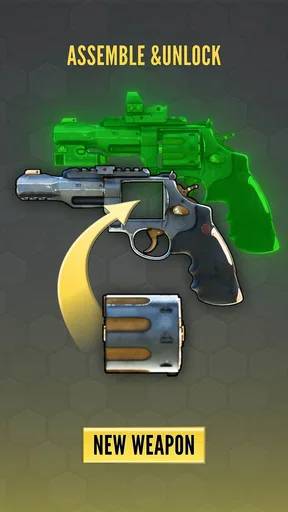
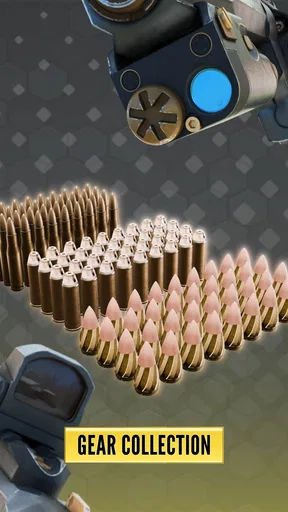
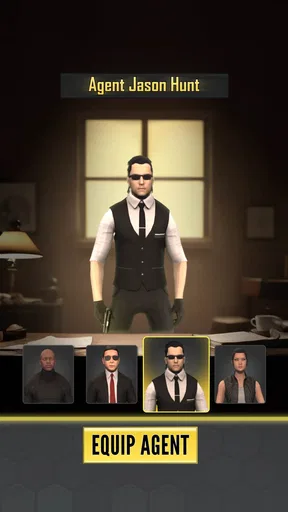
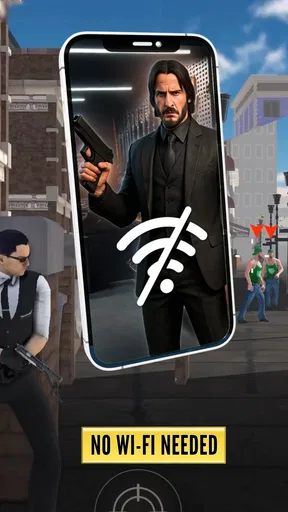
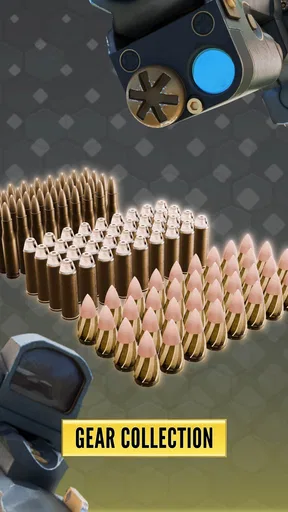
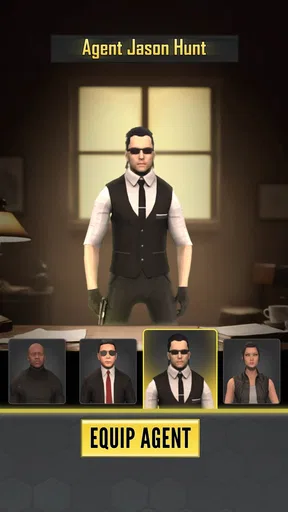
Our Review of Agent Hunt – Hitman Shooter
 Analysis by Appyee
Agent Hunt – Hitman Shooter is the kind of action game I can open for a quick burst and understand almost immediately. It puts me in the role of a hired marksman, then builds its appeal around aiming, timing, and the satisfaction of completing a clean shot. I found the presentation more important than I expected: the locations, character silhouettes, sound effects, and short encounters work together to create a compact spy-thriller mood without asking me to learn a complicated control system first.
That simplicity is both its strongest quality and its main limitation. I would recommend it to someone who wants an accessible mobile sniper game with fast sessions, clear objectives, and a stylish action tone. I would not choose it as a replacement for a large stealth game or a deep competitive shooter. Its pleasures are focused, repeatable, and easy to reach rather than broad or endlessly complex.
Developed by Homa, this free action game has built a substantial audience, with a 4.5 average from around 1.1 million ratings and over 100 million installs. It is rated Teen, so I would keep its action presentation in mind before handing it to a younger player. The game first appeared on June 3, 2023, and version 33.4.11 is the current version I considered here.
How the first minutes establish the mood
My first impression was that Agent Hunt understands the value of immediate feedback. The game does not need a long explanation to communicate what I am supposed to do: observe the scene, line up a target, and act when the opportunity feels right. That directness makes it easy to pick up during a commute, while waiting for an appointment, or whenever I only have a few minutes to spare.
The visual language is deliberately readable. Targets stand out against the environment, the action is framed so that I can follow the important movement, and the interface keeps the central task in view. I never felt that decorative elements were competing with the shot itself. For a touchscreen game, that clarity matters more than a crowded collection of buttons.
What makes the opening feel more polished than a basic shooting gallery is the sense of a small scenario rather than an isolated tap. Even when the objective is straightforward, the surrounding scene gives the shot a reason to exist. I am not simply firing at random objects; I am watching for a moment, judging the arrangement, and deciding when to commit.
The controls are also approachable for players who do not usually play shooters on a phone. I can concentrate on aiming without managing the movement and equipment menus that often make mobile action games feel cramped. That makes the title a good starting point for someone curious about the genre but unwilling to spend an hour adjusting sensitivity or memorizing abilities.
There is a useful trade-off here. Because the control idea is so focused, the game can become familiar quickly. Players who need a large skill tree, elaborate loadouts, or several distinct combat roles may find the first impression appealing but the longer-term structure less satisfying. I enjoyed the clean entry point, but I also recognized that the game’s identity depends on how well its situations keep that simple action feeling fresh.
Why the setting matters more than the premise
The hitman theme could easily have become a thin excuse for placing targets on screen, yet the presentation gives it some personality. The game leans into the fantasy of being a controlled professional: I watch, wait, and try to make the decisive action feel deliberate. That is different from the frantic energy of a conventional run-and-gun shooter, where movement and constant firing usually dominate.
The environments help sell this difference. They act as visual stages for timing and observation, not merely as empty backgrounds. Lines, cover, distance, and the placement of people in the scene affect how I read the moment. Even when I already understand the basic objective, the setting can make me pause and look again before taking the shot.
I especially liked how the art direction keeps the action legible without abandoning atmosphere. Strong shapes and clear contrasts make the target easy to identify, while the surrounding details suggest a world beyond the immediate interaction. It is not trying to be a realistic military simulator. Instead, it uses a stylized action language that lets the game remain readable on a small screen.
That choice also affects the emotional tone. The game feels closer to a brisk comic-book spy scene than to a grim, slow-burning crime drama. The presentation gives the player a sense of cool control, but it does not ask me to take the fictional world with the seriousness of a narrative-heavy stealth title. I found that balance useful because it keeps the sessions light enough for casual play.
Art direction as a guide for the player
One of the less obvious strengths is that the art is doing practical work. It helps me separate the important subject from the background, recognize where attention should go, and understand the result of an action quickly. In a touchscreen game, this is not just visual decoration; it reduces hesitation caused by unclear framing.
My advice is to resist the urge to fire the instant a target appears. The best experience comes from treating each scene as a small visual puzzle. I look at the whole arrangement first, notice what might change if I wait, and then choose the moment that seems safest or most satisfying. This approach makes the game feel more like a hitman scenario and less like a reflex test.
That habit is also useful when the screen becomes visually busy. Rather than dragging the aim constantly, I make small adjustments and let the scene reveal its rhythm. It is a simple change, but it gives me more control and makes misses feel like decisions I could improve rather than random failures.
Sound, pacing, and the feeling of a clean shot
The sound design supports the same controlled mood as the visuals. The important audio moments are the shot, the reaction, and the confirmation that the action worked. Those sounds give each encounter a beginning and an end, which helps a short level feel complete instead of unfinished.
I noticed that the audio is most effective when I treat it as part of the timing. A shot is not only something I see; it is something I hear land. That feedback makes the action feel more physical, especially when I am playing with attention divided between the game and whatever is happening around me.
The rhythm is intentionally compact. I can move from observation to action without waiting through long stretches of travel or complicated preparation. This makes the game well suited to short breaks, but it also means the pacing is not built for players who want extended suspense. If you prefer a slow stealth experience with long patrol patterns and elaborate planning, this is a much lighter interpretation of that fantasy.
For me, the strongest sessions came when I stopped rushing. The game may be quick, but quick does not have to mean careless. I take a second to read the scene, make the shot, and let the sound and visual response complete the moment. That small pause gives the game a satisfying cadence: observe, decide, fire, recover.
There is a practical advantage to this structure in everyday use. Suppose I have a few minutes before a train arrives. I can play without needing to remember a complicated story state or reconstruct a large map. The compact rhythm lets me finish a small piece of action, put the phone away, and return later without feeling that I abandoned a major ongoing mission.
Where the rhythm may wear thin
The same short-cycle design can become repetitive if I am looking for constant escalation. Once the basic loop is familiar, the pleasure depends heavily on how much variety I personally find in the situations and presentation. I enjoyed the focused format, but I would not pretend that it offers the same breadth as a full console-style stealth campaign or a multiplayer shooter with changing opponents.
Another consideration is the free-to-play structure. The game costs nothing to start, which makes it easy to try, but it includes in-app purchases ranging from $0.99 to $99.99 per item. I would approach those purchases carefully. The most sensible way to evaluate the game is to play it naturally first and decide whether the core loop already gives me enough value before spending anything.
This is also why I would avoid treating the game as a passive time filler for children. The Teen rating and the hitman theme make it better suited to players who are comfortable with stylized shooting and assassination scenarios. The presentation is not the same as realistic violence, but the central fantasy is still built around taking down targets.
How the mechanics fit the mood
The mechanics and presentation generally point in the same direction. The game wants me to feel like a precise agent, and its most enjoyable moments come from patience, visual reading, and a well-timed shot. That alignment is important: if the controls forced frantic movement or constant button pressing, the cool professional mood would disappear.
I found the game easiest to enjoy when I set a small personal goal for each encounter. Sometimes that goal is simply to avoid wasting a shot. At other times, I focus on spotting the safest moment rather than acting immediately. These self-imposed standards add depth without requiring a complicated progression system, and they make familiar situations more interesting.
A useful technique is to separate aiming from decision-making. I first decide what I want to accomplish, then move the reticle into position. Doing both at once can make me overcorrect, especially on a small touchscreen. By slowing down the mental part of the action, I get cleaner shots and a stronger sense that the outcome came from my judgment.
The game is also a good fit for players who dislike virtual movement controls. Traditional mobile shooters can feel awkward when a thumb must steer a character, rotate the camera, aim, and fire in a confined space. Agent Hunt narrows the interaction to the part many players actually enjoy: finding the target and making the decisive attack.
That narrow focus will not satisfy everyone. Players who want close-quarters combat, exploration, team tactics, or a large arsenal should look toward a broader action game instead. Here, the pleasure comes from refinement within a limited role. I would describe it as a focused action experience, not a complete simulation of being a professional assassin.
Who will get the most from it
I think Agent Hunt is best for casual action players, fans of stylized spy fiction, and anyone who wants a game that can be understood quickly. It is particularly suitable for people who enjoy aiming challenges but do not want the pressure of online competition. The free entry point makes trying it straightforward, while the familiar premise removes much of the learning barrier.
It can also work for experienced players who appreciate presentation and short sessions. I would not recommend it because it offers endless mechanical variety; I would recommend it because it turns a simple interaction into a neat package of visual tension, sound feedback, and quick resolution.
I would skip it if my priority were a deep stealth sandbox. In that kind of game, I expect multiple routes, extensive reconnaissance, environmental manipulation, and consequences that unfold over a long mission. This title offers a more concentrated version of the fantasy. It gives me the moment of judgment and the satisfaction of execution, but not the same scale of planning.
Compared with a usual mobile FPS, its advantage is accessibility and focus. I spend less time wrestling with movement and more time reading the shot. Compared with a puzzle game, it has a stronger action identity and more immediate sensory feedback. Compared with a premium single-player stealth game, it is lighter, more segmented, and easier to fit into a busy day, though less substantial.
Practical expectations before installing
The game is free, but I would not confuse free access with a completely frictionless experience. The listed purchase range reaches from $0.99 to $99.99 per item, so anyone sensitive to monetization should keep an eye on the purchase flow and decide on a personal limit before playing. I prefer making that decision in advance rather than allowing a moment of frustration or excitement to determine it.
Device compatibility is broad enough for older supported phones, since the minimum operating system is Android 7.1. That makes the game approachable for people who are not using the newest hardware. Still, a supported operating system does not automatically guarantee identical performance on every device, so I would keep expectations sensible if my phone is older or already struggles with demanding games.
The current version, 33.4.11, is worth checking when installing or updating. Version awareness is useful here because action games depend on responsive controls and stable presentation; I would rather begin with the current build than judge an outdated installation.
The large audience is reassuring in one narrow sense: this is not an obscure experiment that I would expect to disappear from attention immediately. With over 100 million installs, it has clearly reached many mobile players. The 4.5 average also suggests that the central idea connects with a broad audience, although my own decision would still depend on whether I enjoy the focused sniper format.
My atmosphere verdict
Agent Hunt – Hitman Shooter succeeds when its parts reinforce one another. The stylized environments make the target readable, the sound gives the shot weight, and the compact pacing preserves the feeling of a professional waiting for the right moment. None of these elements needs to be extremely complicated on its own. Together, they create a coherent playable mood that is more memorable than a bare aiming exercise.
I appreciate that the game does not bury its main attraction under unnecessary complexity. I can start quickly, understand the objective, and improve by paying closer attention rather than studying a large rulebook. That makes it a strong recommendation for short, self-contained action sessions, especially when I want something more atmospheric than a generic target range.
My reservations are equally clear. The focused loop may not hold me forever, and the game cannot replace a full stealth adventure, a competitive shooter, or a story-led action campaign. The free-to-play purchase range also means I would play thoughtfully and avoid spending until I know the basic experience suits me.
Overall, I see it as a polished mood piece built around one satisfying action: lining up the moment and taking the shot. If that fantasy appeals to you, I think the game is worth trying for its accessible controls, readable art direction, and sharp short-session rhythm. If you need expansive missions or deep tactical freedom, I would point you elsewhere. For everyone in between, this is a convincing example of how a narrow mechanic can feel complete when the setting, sound, and pacing all know exactly what they are trying to achieve.
Verdict
Strengths of Agent Hunt – Hitman Shooter
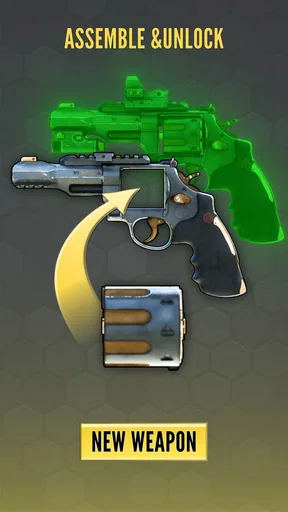
- Smooth controls make aiming and moving easy on mobile devices.
- Short missions are convenient for quick gaming sessions.
- Stealth-focused gameplay rewards patience and careful planning.
- Weapon upgrades provide a sense of progression between missions.
- Offline play is useful when you have no internet connection.
Limitations of Agent Hunt – Hitman Shooter
- Enemy behavior can feel predictable after repeated missions.
- Some levels rely heavily on similar objectives and layouts.
- Progression may feel slow without spending time on upgrades.
- Touch controls can be less precise during fast firefights.
- Ads may interrupt the experience, depending on the game version.
Other Releases by Homa
View All
Attack Hole - Black Hole Games
Arcade4.2

Merge Master: Dinosaur Monster
Arcade4.2

Farm Land - Farming life game
Adventure4.5

Weapon Master: Action Gun Game
Action4.5
Similar Picks in This Category
View All
Temple Run 2: Endless Escape
Imangi Studios4.1

PUBG MOBILE
Level Infinite4.3

Free Fire: 9th Anniversary
GARENA INTERNATIONAL I4.4

Talking Tom: Hero Dash Run
Outfit7 Limited4.3

slither.io
Lowtech Studios3.9

Sniper 3D:Gun Shooting Games
Wildlife Studios4.6
Frequently Asked Questions
What is Agent Hunt – Hitman Shooter?
Agent Hunt – Hitman Shooter is a mobile action game focused on stealth-inspired shooting missions. You play as a professional assassin, study each location, eliminate assigned targets, and escape or complete the objective. The game combines third-person movement, aiming, weapon upgrades, and short mission-based levels, making it suitable for players who enjoy casual shooting games with a spy and hitman theme.
Is Agent Hunt – Hitman Shooter free to download and play?
Yes, Agent Hunt – Hitman Shooter can generally be downloaded and played for free on supported mobile devices. However, the experience may include advertisements and optional in-app purchases for weapons, upgrades, currency, or other bonuses. You can usually progress without paying, although purchases may help unlock content faster or reduce the time needed to improve your equipment.
Does Agent Hunt – Hitman Shooter require an internet connection?
The game may allow some missions to be played offline, but an internet connection can still be required for advertisements, rewards, updates, purchases, or certain online features. Availability may vary depending on the version installed and your device. If you plan to play while traveling or without mobile data, it is best to test the game after installation before relying on offline access.
Is Agent Hunt – Hitman Shooter suitable for children?
Agent Hunt – Hitman Shooter is built around assassination missions, firearms, and combat, so it may not be appropriate for younger children. The exact age recommendation depends on the platform and regional rating, but parents should review the game’s violence, advertising, and in-app purchase features before allowing access. Device parental controls can also help restrict purchases and playtime.
What devices are compatible with Agent Hunt – Hitman Shooter?
Compatibility depends on the operating system, device model, available storage, and the minimum version required by the current release. Recent Android and iOS smartphones or tablets should provide the best experience, while older devices may experience slower loading, reduced graphics quality, or crashes. Check the official store listing before downloading to confirm system requirements and available storage space.
Play our best games!


